

As a supplier of electric drive axles, I've witnessed firsthand the remarkable advancements and the challenges that come with the development of high - power electric drive axles. In this blog, I'll delve into the key challenges that we, as an industry, are facing in this field.
Technological Limitations
One of the most significant challenges in the development of high - power electric drive axles is the technological limitations, especially in terms of power density. High - power electric drive axles need to deliver a large amount of power in a relatively small and lightweight package. However, current battery and motor technologies have their limitations.
Batteries, for instance, are still struggling to achieve the desired energy density. High - power electric drive axles require a continuous supply of high - energy electricity, but the existing lithium - ion batteries can only store a limited amount of energy per unit volume. This means that for high - power applications, larger and heavier battery packs are often needed, which can offset the benefits of an electric drive axle in terms of overall vehicle efficiency and performance.
In addition, the power electronics in high - power electric drive axles also face challenges. These components are responsible for controlling the flow of electricity between the battery and the motor. As the power requirements increase, the power electronics need to handle higher currents and voltages, which can lead to issues such as overheating and reduced reliability. Developing power electronics that can efficiently handle high - power loads while maintaining a small form factor is a major technological hurdle.
Thermal Management
Thermal management is another critical challenge in the development of high - power electric drive axles. When an electric drive axle operates at high power, a significant amount of heat is generated in the motor, battery, and power electronics. If this heat is not properly managed, it can cause several problems.
For the motor, excessive heat can reduce its efficiency and lifespan. High temperatures can degrade the insulation materials in the motor, leading to short - circuits and motor failures. In the battery, overheating can accelerate the aging process, reducing its capacity and overall performance. The power electronics are also sensitive to heat, and high temperatures can cause component failures and reduced control accuracy.
To address these issues, effective thermal management systems need to be developed. These systems typically involve cooling mechanisms such as liquid cooling or air cooling. However, designing a cooling system that can efficiently remove heat from all the critical components in a high - power electric drive axle while being compact and energy - efficient is a complex task.
Cost
Cost is a major factor that affects the widespread adoption of high - power electric drive axles. The development and production of high - power electric drive axles involve advanced technologies and high - quality components, which can significantly increase the cost.
The battery, which is one of the most expensive components in an electric drive axle, accounts for a large portion of the total cost. High - energy - density batteries are still relatively expensive to produce, and as the power requirements of the electric drive axle increase, the size and cost of the battery also go up.
In addition, the motor and power electronics used in high - power electric drive axles are also costly. These components need to be designed and manufactured to handle high - power loads, which often requires the use of specialized materials and manufacturing processes. The cost of research and development for new technologies and components also adds to the overall cost of high - power electric drive axles.
Integration with Existing Vehicle Systems
Integrating high - power electric drive axles into existing vehicle systems is a challenge that cannot be overlooked. Most vehicles are currently designed for traditional internal combustion engines, and adapting them to accommodate high - power electric drive axles requires significant modifications.
The vehicle's chassis, suspension, and braking systems need to be redesigned to handle the different torque characteristics and weight distribution of an electric drive axle. The electrical system in the vehicle also needs to be upgraded to supply power to the high - power electric drive axle. In addition, the vehicle's control systems need to be reprogrammed to work with the electric drive axle, ensuring smooth and efficient operation.
Moreover, the integration process needs to comply with various safety and regulatory standards. Ensuring that the high - power electric drive axle and its integration with the vehicle meet all the necessary safety requirements is a complex and time - consuming task.
Market Acceptance
Market acceptance is a crucial challenge for the development of high - power electric drive axles. Despite the many advantages of electric drive axles, such as lower emissions and higher efficiency, there are still some concerns among consumers and vehicle manufacturers.
Some consumers are worried about the range and charging infrastructure of electric vehicles with high - power electric drive axles. They are concerned that they may not be able to travel long distances without running out of battery power, and that the charging infrastructure may not be sufficient to meet their needs. Vehicle manufacturers, on the other hand, are often hesitant to invest in new technologies due to the high development costs and the uncertainty of market demand.
To increase market acceptance, efforts need to be made to improve the range of electric vehicles with high - power electric drive axles and to expand the charging infrastructure. In addition, educating consumers and vehicle manufacturers about the benefits of high - power electric drive axles is also essential.
Solutions and Future Outlook
Despite these challenges, there are several solutions that can be implemented to overcome them. In terms of technological limitations, continuous research and development are needed to improve battery and motor technologies. For example, new battery chemistries such as solid - state batteries have the potential to offer higher energy densities and better thermal stability.
To address the thermal management challenge, more advanced cooling technologies can be explored. For instance, using phase - change materials in the cooling system can provide more efficient heat transfer. In terms of cost, economies of scale can be achieved through increased production volume. As the demand for high - power electric drive axles grows, the cost of components is likely to decrease.
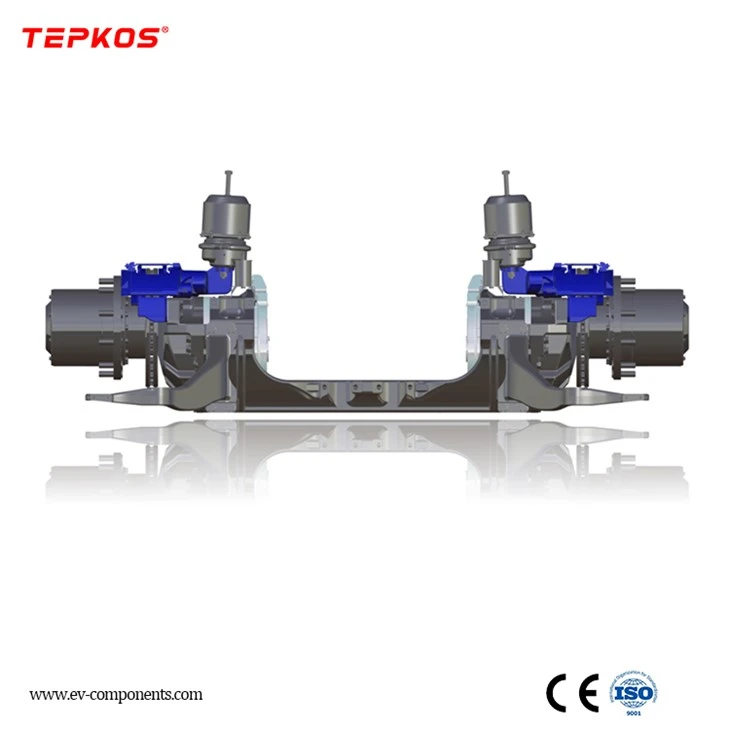

For integration with existing vehicle systems, standardization and modular design approaches can be adopted. This can make it easier to integrate high - power electric drive axles into different vehicle models. To improve market acceptance, government incentives and policies can play a crucial role in promoting the adoption of electric vehicles.
In conclusion, the development of high - power electric drive axles faces several challenges, including technological limitations, thermal management, cost, integration with existing vehicle systems, and market acceptance. However, with continuous innovation and collaboration, these challenges can be overcome. As a supplier of electric drive axles, we are committed to working with our partners to develop solutions that can drive the widespread adoption of high - power electric drive axles.
If you are interested in Electric Truck Axle, EV Axle, or Electric Axle for Truck, we welcome you to contact us for procurement discussions. We look forward to the opportunity to work with you and contribute to the future of high - power electric drive axles.
References
- Smith, J. (2020). "Advances in Electric Drive Axle Technology." Journal of Electric Vehicle Engineering, 15(2), 45 - 52.
- Johnson, A. (2021). "Thermal Management in High - Power Electric Drives." International Journal of Thermal Sciences, 89, 106932.
- Brown, C. (2019). "Cost Analysis of Electric Drive Axles." Transportation Research Part D: Transport and Environment, 77, 102215.