

Hey there! As a supplier of Axle Electric, I'm often asked about the power density of Axle Electric. So, let's dive right into this topic.
First off, what exactly is power density? In simple terms, power density is the amount of power that can be delivered per unit volume or mass. For Axle Electric, it's a crucial metric because it directly impacts the performance, size, and efficiency of the whole system.
Think about it this way: a high - power - density Axle Electric setup can deliver a large amount of power in a relatively small and lightweight package. This is super important for vehicles, especially those where space and weight are at a premium, like electric cars, trucks, and buses.
Let's talk about how power density affects different types of electric axles. We've got Electric Axle for Truck. Trucks need a whole lot of power to haul heavy loads. A high - power - density electric axle allows the truck to have a smaller and lighter propulsion system, which means more space for cargo and better fuel efficiency (in the case of electric trucks, that’s more range per charge).
For a long - haul truck, having an electric axle with high power density can make a huge difference. It can reduce the overall weight of the vehicle, which not only saves energy but also puts less stress on the tires and the chassis. And let's not forget about maintenance. A more compact and efficient electric axle means fewer parts to break down and replace, which can save trucking companies a ton of money in the long run.
Now, Electric Front Axle is another area where power density matters. In a front - wheel - drive electric vehicle, the front axle needs to be able to deliver enough power to get the car moving and keep it going. A high - power - density front axle can provide quicker acceleration and better handling.
For sports cars or performance - oriented electric vehicles, a powerful front axle can make the difference between a so - so driving experience and an exhilarating one. The ability to pack a lot of power into a small front - axle assembly also allows for more creative vehicle designs, like lower hood lines and better weight distribution.

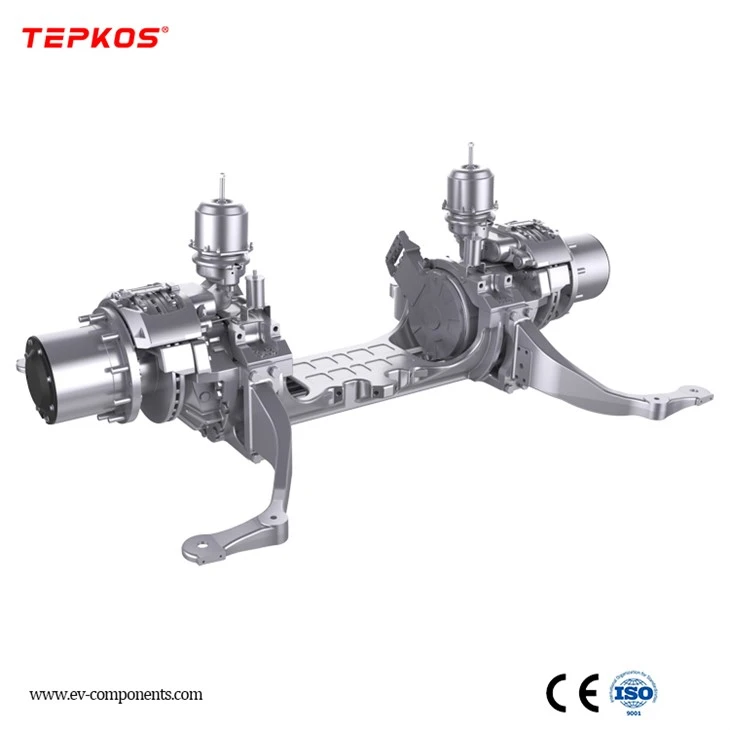
And then we have the Rear Axle With Electric Motor. In rear - wheel - drive or all - wheel - drive electric vehicles, the rear axle plays a vital role. A high - power - density rear axle can improve traction, especially in cornering and during acceleration. It gives the driver more control over the vehicle's movement.
In SUVs or crossover vehicles, a powerful rear axle can enhance off - road capabilities, allowing the vehicle to navigate rough terrain more easily. The high - power - density design also means that the rear axle can be more responsive, providing instant power when needed.
But how do we achieve a high power density in Axle Electric? Well, it all comes down to advanced engineering and the use of high - tech materials. For the electric motors, we're talking about using rare - earth magnets that can generate a strong magnetic field in a small space. These magnets allow the motor to produce more torque and power without getting too big or heavy.
The power electronics, like inverters and controllers, also play a key role. By using the latest semiconductor technologies, we can reduce the size and weight of these components while still maintaining high efficiency. This means that the power can be transferred from the battery to the electric motor more effectively.
Heat management is another crucial aspect. High - power electric axles generate a lot of heat, and if not managed properly, it can reduce the efficiency and lifespan of the components. That's why we use advanced cooling systems, like liquid - cooled jackets and heat sinks, to keep the temperature under control. These cooling systems are designed to be as compact as possible so that they don't add too much extra weight or take up too much space.
Another factor that contributes to power density is the integration of different components. Instead of having separate motors, gears, and controllers, we're now seeing more integrated designs. In an integrated electric axle, all the components are designed to work together seamlessly, which reduces the overall volume and weight of the system. This not only improves power density but also simplifies the installation and maintenance process.
When it comes to comparing different Axle Electric products, power density is one of the most important factors to consider. A higher power - density axle can offer better performance, longer range, and lower costs in the long run. But it's not the only thing to look at. You also need to consider factors like reliability, durability, and compatibility with your vehicle.
As a supplier of Axle Electric, we're constantly working on improving the power density of our products. We're investing in research and development to come up with new designs and technologies that can push the boundaries of what's possible. Our team of engineers is always looking for ways to make our electric axles smaller, lighter, and more powerful.
If you're in the market for an Axle Electric solution, whether it's for a truck, a car, or any other vehicle, I'd highly recommend considering power density as a top - priority factor. And don't hesitate to reach out to us for more information. We're here to help you find the perfect electric axle for your needs. Whether you need a high - power - density axle for a high - performance vehicle or a more cost - effective solution for a commercial fleet, we've got options.
Contact us to start a conversation about your specific requirements. We can work with you to understand your unique situation and build a customized solution that meets your exact needs. Let's work together to take your vehicle's performance to the next level with our high - quality Axle Electric products.
References
- General principles of electric vehicle powertrain design
- Industry reports on electric axle technology
- Research papers on power density optimization in electric motors