

In recent years, the electric vehicle (EV) industry has witnessed remarkable growth, driven by the global push towards sustainable transportation. As an EV axle supplier deeply involved in this dynamic sector, I have witnessed firsthand the critical role that axle size plays in determining the performance of electric vehicles. This blog post delves into how the size of an EV axle affects its performance and why it matters for different types of electric vehicles.
1. Impact on Torque Transmission
One of the primary functions of an EV axle is to transmit torque from the electric motor to the wheels. The size of the axle directly influences its torque - handling capacity. Generally, larger axles have a greater cross - sectional area, which enables them to withstand higher levels of torque without deforming or breaking.
For heavy - duty electric trucks, such as those used for long - haul transportation or construction, high torque is required to move large loads. In this context, a larger EV axle is essential. Our Electric Drive Axle For Truck is designed with a substantial size to handle the significant torque demands of these vehicles. The increased diameter and wall thickness of the axle shaft provide the necessary strength to transfer the powerful rotational forces generated by the electric motor, ensuring smooth and reliable operation even under extreme conditions.
On the other hand, for smaller electric vehicles like city cars or electric scooters, the torque requirements are much lower. A smaller axle is sufficient to transmit the relatively modest torque from the motor. It also helps in reducing the overall weight of the vehicle, which is beneficial for energy efficiency and improving acceleration.
2. Influence on Vehicle Stability
Vehicle stability is a crucial aspect of EV performance, and the axle size has a significant impact on it. Larger axles can provide a wider track width, which is the distance between the left and right wheels on the same axle. A wider track width enhances the vehicle's lateral stability, especially during high - speed cornering or when the vehicle is subjected to cross - winds.
In electric trucks, a wider track width achieved through larger axles helps in preventing roll - overs and maintaining better control. Our Electric Axle for Truck is engineered to offer an optimal track width, which contributes to the overall safety and stability of the truck. This is particularly important for trucks carrying heavy and unevenly distributed loads.
For smaller EVs, while the need for a wide track width is not as critical, the axle size still needs to be carefully balanced. A too - small axle may lead to a narrow track, which can make the vehicle more prone to instability. However, an overly large axle can add unnecessary weight and bulk, negatively affecting the vehicle's maneuverability.
3. Energy Efficiency Considerations
Energy efficiency is a top priority in the design of electric vehicles, and the axle size plays an important role in this regard. Smaller axles generally have less mass, which means less energy is required to accelerate and decelerate them. This results in lower energy consumption and improved range for the EV.
When it comes to our Ev Axle Kit, we offer different axle sizes to meet the diverse needs of our customers. For applications where energy efficiency is the main concern, such as in urban electric cars, a smaller axle can be selected. The reduced rotational inertia of a smaller axle allows the electric motor to operate more efficiently, as it doesn't have to work as hard to spin the axle.
However, in heavy - duty applications, sacrificing torque capacity for the sake of a smaller axle is not an option. We have to find a balance between size, strength, and efficiency. Our engineers work on optimizing the design of larger axles to reduce their weight while maintaining their structural integrity. This can involve the use of lightweight materials such as high - strength steel or aluminum alloys, which help in minimizing energy losses due to the axle's mass.
4. Handling and Maneuverability
The handling and maneuverability of an electric vehicle are also affected by the axle size. Smaller axles are more conducive to better maneuverability. They can provide a smaller turning radius, making it easier for the vehicle to navigate through tight spaces, such as narrow city streets or parking lots.

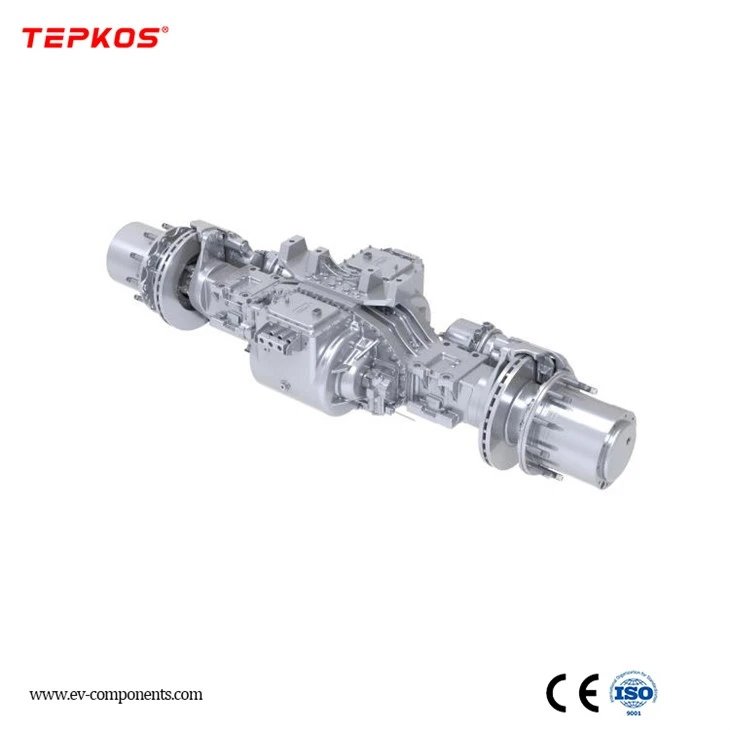
In contrast, larger axles, while beneficial for torque and stability in heavy - duty applications, can limit the vehicle's maneuverability. Trucks with larger axles may require more space to turn, and their handling characteristics may be less responsive compared to smaller vehicles. However, advancements in steering systems and suspension technology can help mitigate some of these challenges. For instance, we are constantly researching and developing new technologies to improve the handling of electric vehicles with larger axles, ensuring that they can still operate efficiently in various environments.
5. Adaptability to Different Vehicle Configurations
The size of the EV axle also determines its adaptability to different vehicle configurations. Different electric vehicles have distinct design requirements, and the axle must be able to fit seamlessly into these setups.
For example, electric buses often have a different layout compared to trucks or cars. They may require a specific axle size and design to accommodate the larger number of passengers and the longer wheelbase. Our range of EV axles is designed to be adaptable to various vehicle configurations, ensuring that we can provide the right solution for different types of electric vehicles. Whether it's a compact electric car, a medium - duty electric van, or a heavy - duty electric truck, we can offer an axle size that meets the specific needs of the vehicle.
6. Cost - effectiveness
Cost - effectiveness is an important consideration for both EV manufacturers and end - users. The size of the axle can impact the overall cost of the vehicle. Smaller axles are generally less expensive to manufacture, as they require less material and less complex machining processes. This can result in a lower cost for the electric vehicle, making it more accessible to a wider range of consumers.
However, in heavy - duty applications, the cost of the axle is often outweighed by the benefits it provides in terms of performance and durability. A larger, more robust axle may be more expensive upfront, but it can reduce maintenance costs over the vehicle's lifespan by minimizing the risk of axle failure. Our company is dedicated to providing cost - effective solutions. We carefully balance the cost of our EV axles with their performance and quality, ensuring that our customers get the best value for their money.
Conclusion
In conclusion, the size of an EV axle has a profound impact on its performance, influencing torque transmission, vehicle stability, energy efficiency, handling, adaptability to different configurations, and cost - effectiveness. As an EV axle supplier, we understand the importance of carefully selecting the right axle size for each electric vehicle application.
Whether you are an EV manufacturer looking to optimize the performance of your vehicles or a fleet operator in need of reliable axles for your electric trucks, we are here to provide you with high - quality solutions. We have a wide range of EV axles, including our Electric Drive Axle For Truck, Electric Axle for Truck, and Ev Axle Kit, designed to meet diverse requirements.
If you are interested in discussing your specific needs or are ready to start a procurement process, please feel free to reach out to us. We are eager to engage in detailed discussions and provide you with the most suitable EV axles for your applications.
References
- Smith, J. (2020). "Advances in Electric Vehicle Axle Technology." Journal of Automotive Engineering.
- Johnson, A. (2021). "The Impact of Axle Design on Electric Vehicle Performance." International Journal of Sustainable Transportation.
- Brown, C. (2022). "Optimizing Electric Vehicle Axles for Energy Efficiency." Automotive Innovation Review.