

Driven by the implementation of carbon neutrality policies, traditional fuel trucks are steadily transitioning toward new energy solutions and gradually entering the field of vision of truck owners. Truck drive configurations have evolved from the traditional rear axle setups used in early fuel models, to the motor plus conventional rear axle configuration of early pure electric trucks, and now to advanced electric drive axle technologies. So what are the differences between these solutions? Today, TRION explains them for truck owners.
Traditional Rear Drive Axle: Time-Tested, Reliable, and Proven
Traditional fuel trucks have a long development history, with mature chassis designs and stable overall structures. The rear drive axle consists of a main reducer, differential, transmission gear mechanism, and axle housing, and is responsible for distributing power from the drive shaft to the left and right wheels.
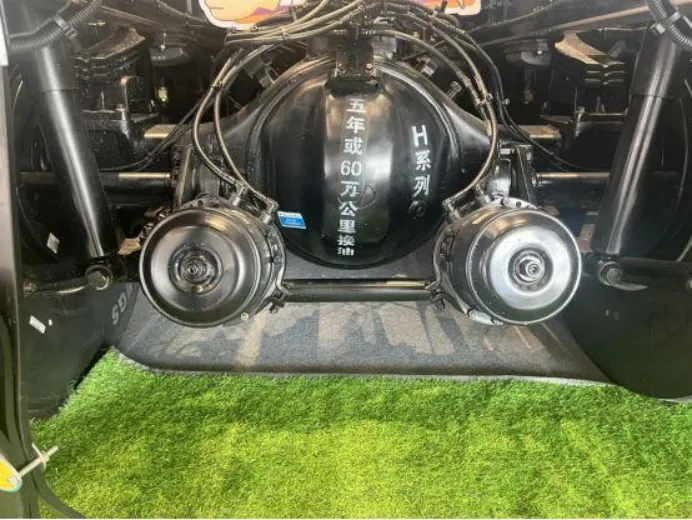
After years of continuous development, rear axles for fuel trucks have undergone multiple iterations. Whether it is the widely used conventional half-shaft axle or the more practical wheel-side reduction axle commonly seen today, these systems have accompanied truck owners on their journey toward profitability through cargo transportation.
Similarly, as pure electric technology has matured, the drive configurations of electric trucks have continued to evolve. Currently, three main drive modes dominate the market: central motor drive, integrated electric drive axle, and distributed electric drive axle.
Central Motor Drive: Simple Structure, Limited Application Scenarios
The earliest pure electric drive solutions adopted mature technologies from fuel vehicles by simply replacing the engine with an electric motor. Because the motor is installed near the center of the vehicle, this configuration is known as central motor drive. This approach requires minimal modification to the original chassis layout, offering a simple structure, low cost, and rapid industrialization.
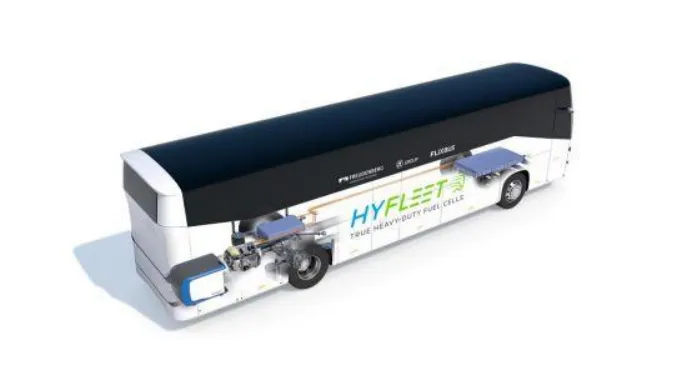
Central motor drive systems are widely used in overseas low-floor bus models. The power output form-motor + transmission + drive axle-focuses on pure electric transmissions. A typical 2-speed electric transmission can deliver up to 500 N·m of torque and is suitable for light trucks with payloads of 10 tons or less.
As a result, central motor drive is common in buses and light-duty trucks but is rarely used in heavy-duty trucks. The main reason is that a single motor cannot meet the high power and torque demands of heavy-duty applications. Although dual-motor central drive systems can theoretically meet these requirements, they have not been widely adopted due to high system costs, increased weight, and complex structures and control strategies.
Integrated Electric Drive Axle: Multiple Advantages and the Domestic Mainstream
In a central motor drive system, kinetic energy generated by the motor is transmitted through the gearbox and then the rear axle, resulting in energy losses before reaching the wheels. To achieve higher power performance and better meet user needs, a new drive mode has emerged that integrates the motor, inverter, and electric transmission directly into the drive axle. This development led to the rise of the integrated electric drive axle.

In this configuration, speed reduction and torque amplification occur directly at the axle, significantly improving transmission efficiency compared with central motor drive. It also eliminates components such as the drive shaft and suspension brackets, reducing both vehicle weight and manufacturing cost. The freed-up space can be used to install additional battery packs, further improving driving range.
Supported by both its technical advantages and favorable policy and market environments, the integrated electric drive axle has become the most widely adopted drive solution for pure electric trucks in China, with a wide range of brands offering mature products.

For example, BYD has launched an 8×4 all-electric dump truck equipped with a self-developed, mass-produced dual-link integrated electric drive axle-essentially two sets of electrically integrated multi-stage reduction axles. This configuration achieves a maximum climbing gradient of over 50% and transmission efficiency exceeding 95%. For truck owners engaged in sand, gravel, and other resource transportation in the Yunnan–Guizhou–Sichuan region, this electric truck axle enables efficient and reliable operations.
Distributed Electric Drive Axle: High Integration and a Future Trend
Depending on motor placement, electric drive axles can also adopt a more advanced distributed configuration, which offers higher efficiency, lower energy consumption, and lighter weight.
Distributed electric drive axles generally fall into two categories: wheel-side motor drive and hub motor drive. In a wheel-side motor system, drive motors are installed near each wheel on both sides of the axle, while components such as the reducer and braking system remain integrated into the electric axle assembly.

This technical structure is relatively simple and offers higher transmission efficiency. It also enables precise control of wheel speed and torque through advanced electronic control systems, achieving dynamic performance levels that are difficult for traditional drivetrains to match. As a result, vehicle handling, stability, and overall driving performance are significantly improved.
Currently, Mercedes-Benz Trucks has developed a wheel-side motor drive axle and applied it to the Mercedes-Benz eActros electric heavy-duty truck. In China, BYD has also independently developed a wheel-side electric drive axle. The BYD K9 electric bus equipped with this system has been mass-produced for many years and exported to developed markets such as the United States, Europe, and Japan, with multiple deliveries exceeding 100 units.
Hub motor drive systems further integrate the motor, brake, and hub directly into the wheel, eliminating traditional components such as the transmission, drive shaft, and differential. While this approach achieves an extremely high level of integration, it also presents significant challenges in design complexity, R&D cost, and development cycle. As a result, no domestic automaker has yet achieved large-scale mass production, though future breakthroughs remain possible.
Conclusion
Overall, pure electric drive configurations have evolved from simply replacing the engine with a motor to highly integrated axle and wheel-based solutions that prioritize efficiency and space utilization. Due to technological maturity and cost considerations, the integrated electric drive axle remains the mainstream solution in the domestic market. However, TRION believes that as technology advances and costs decline, rear axle drive configurations will continue to evolve, and distributed electric drive systems will ultimately become the core solution of the future. We look forward to collaborating with leading automakers to achieve further technological breakthroughs and promote the high-quality development of truck electrification.
