


New Energy Commercial Vehicle Electric Drive Axle Design:
Comparison Between Single-Motor and Dual-Motor Solutions
Electric Drive Axle Design Analysis
1.1 Overview
In the field of new energy commercial vehicles, centralized electric drive axles have gradually become the industry mainstream due to their high level of integration, lightweight design, and high efficiency. However, the design of an electric drive axle must comprehensively consider diverse operating conditions, including low-speed start-up, high-speed cruising, and climbing performance.
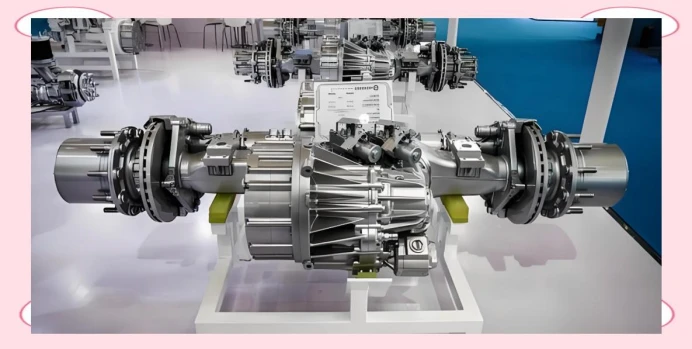
This article aims to explore the technical routes of electric drive axle design in depth, using reducer configuration, single-motor solutions, and dual-motor solutions as key entry points for systematic analysis.
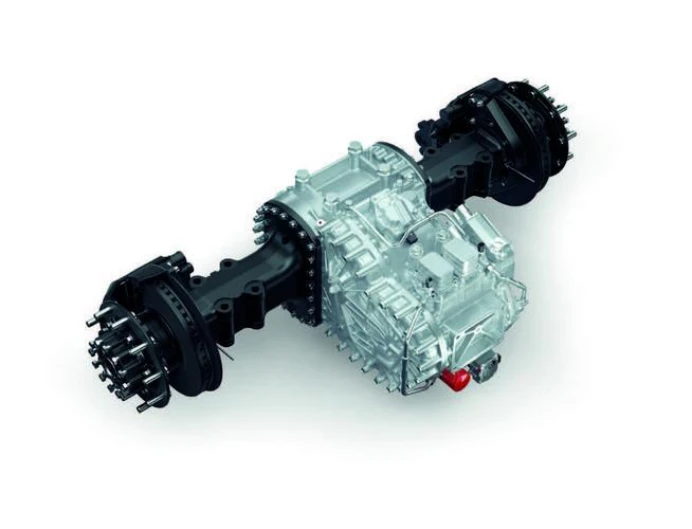
1.2 Core Considerations in Reducer Design
In electric drive axle design for new energy commercial vehicles, the reducer plays a critical role and is often regarded as the "transmission hub" of the entire system. Its design not only affects power transmission efficiency but also directly influences overall vehicle energy consumption.
Three core aspects define reducer design. First, the selection of the number of reduction stages is crucial and must be flexibly adjusted according to specific vehicle operating conditions. Two-stage reducers have become an ideal choice for conventional applications-such as urban logistics vehicles-due to their high transmission efficiency of 95%–96%, simple structure, and short energy transfer path. Compared with planetary carrier transmissions, two-stage reduction structures generally demonstrate higher efficiency in electric drive axle applications.
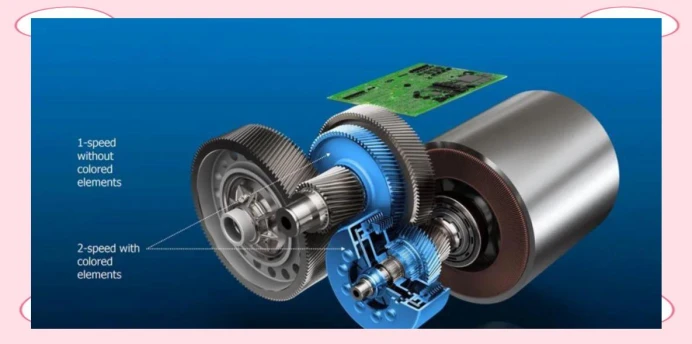
Multi-stage reducers, such as three-stage or four-stage designs, typically exhibit slightly lower transmission efficiency, ranging from 92% to 95%, and feature more complex structures. However, they can provide higher reduction ratios to meet specialized application requirements. In addition, when combined with multi-speed reducer designs, the motor's high-efficiency operating range can be further expanded. For example, during low-speed climbing, a larger reduction ratio increases torque output, while at high-speed cruising, a smaller ratio can be selected to reduce energy consumption.
1.3 Analysis of Single-Motor Solutions
Single-motor designs, characterized by structural simplicity and cost efficiency, are widely adopted in light commercial vehicle applications. This solution is mainly suited for operating scenarios such as urban logistics and short-distance distribution, where peak power requirements generally do not exceed 150 kW.
Single-motor systems typically meet vehicle speed requirements in the range of 0–80 km/h. For instance, the BYD T3 electric drive system, equipped with a 100 kW motor, achieves an NEDC driving range of approximately 300 km.
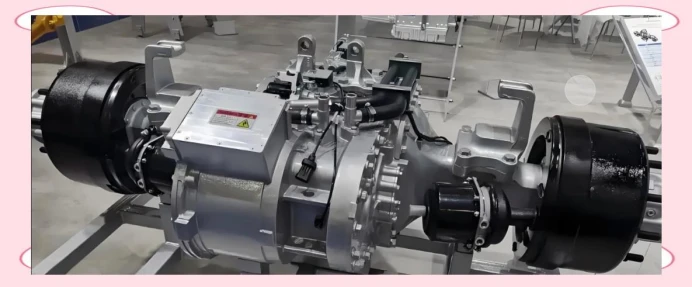
Regarding reducer speed ratio selection, single-stage reduction ratios usually fall within the range of 8–12. TR's light-duty electric drive axle, for example, successfully balances climbing capability (over 20%) and high-speed efficiency, achieving system efficiency of over 92%. When combined with multi-speed reducers, single-motor solutions can deliver high torque at low speeds for climbing and heavy-load start-up while maintaining high efficiency at cruising speeds. This approach broadens the operating range of the electric drive axle and optimizes performance across both low- and high-speed conditions.
However, challenges remain, including temporary power interruption during gear shifting and the complexity of coordinating shift mechanisms with differential control.
1.4 Characteristics of Dual-Motor Solutions
Dual-motor designs enable superior power output under diverse operating conditions through power splitting or torque vectoring strategies. However, they also introduce challenges related to system complexity and cost management.
Under low-speed operating conditions, a single motor with a high reduction ratio can be used to reduce energy consumption. Under high-load conditions, dual motors operate in parallel to deliver high power output, significantly improving acceleration and load-handling performance.
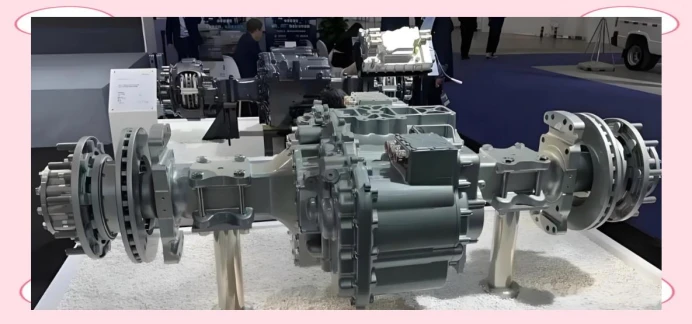
High-precision encoders with an angular resolution of ±0.1°, combined with coordinated control algorithms, ensure balanced torque distribution between the two motors and effectively prevent uneven tire wear. In addition, the lubrication system adopts a dual-circuit design to provide independent heat dissipation for each gear set, ensuring long-term stability and reliability of the electric drive axle system.
Summary
The technical selection of centralized electric drive axles varies depending on application scenarios. Single-motor solutions, with their compact structure and economic advantages, are well suited for light-duty commercial vehicles. Dual-motor solutions offer higher power density and performance, making them ideal for heavy-load or high-performance applications.
Looking ahead, continuous technological innovation will further enhance the efficiency, reliability, and adaptability of electric drive axles, accelerating the advancement of new energy commercial vehicles toward higher levels of electrification.
