

The future of automotive connectivity is here: 5G telematics that deliver real-time traffic updates, V2X (Vehicle-to-Everything) communication that lets cars "talk" to traffic lights and other vehicles, and advanced keyless systems that work from farther away. All of these rely on RF signals that are faster and more reliable than ever before-and fakra cable assembly is built to keep up.

5G automotive applications demand higher frequencies (up to 6 GHz) and lower latency than previous generations. Generic RF cables often struggle with signal degradation at these speeds, but fakra cable assembly's optimized conductor design and shielding handle high-frequency data with ease. In our 5G testing, fakra cable assembly maintained signal strength even when transmitting data at 1 Gbps-fast enough to support 4K in-vehicle streaming and real-time V2X alerts.

V2X is another game-changer. For a car to safely communicate with a pedestrian's smartphone or a highway's traffic management system, the RF signal must be consistent and secure. Fakra cable assembly's standardized design ensures that V2X modules (like roadside unit antennas) connect seamlessly to the vehicle's ECU, reducing the risk of signal drops that could compromise safety. A recent pilot with a commercial vehicle manufacturer found that fakra cable assembly improved V2X communication reliability by 30% compared to non-standard RF cables.
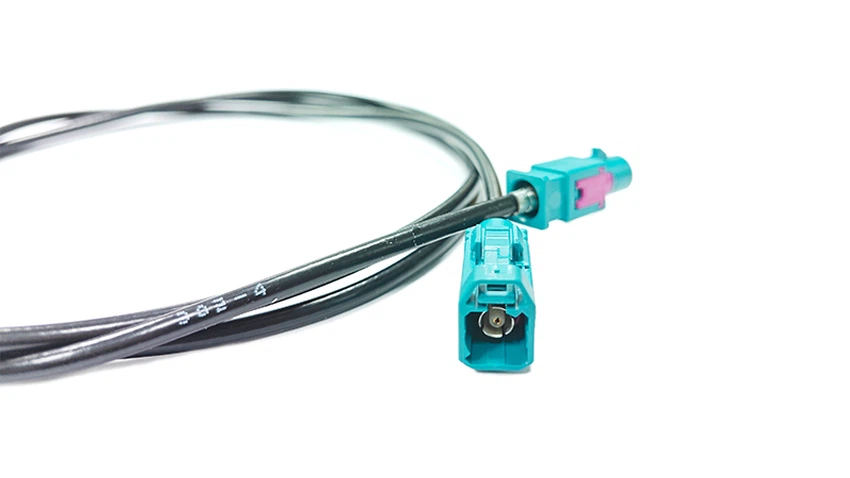
And because fakra cable assembly is a long-standing industry standard, it's easy to integrate into existing vehicle architectures. Teams don't have to rebuild their wiring harnesses to support 5G or V2X-they can simply upgrade to fakra cable assembly and keep moving forward.

For those building vehicles that won't just work today but will lead tomorrow's connected roads, fakra cable assembly is the future-proof choice. It's not just about supporting new tech-it's about making sure that tech works reliably, for every driver.
